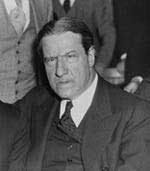
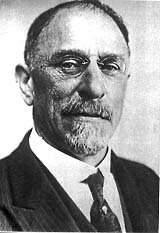
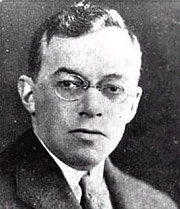
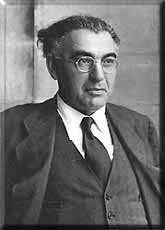
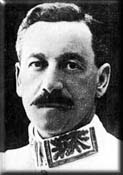
Rabbi Stephen Wise
|
|||||||||||
|
THE PROBLEM OF JEWISH An HIR series
________________________________________________________ Table of Contents ( hyperlinked █
) █ Introduction █ A
few words about antisemitism █ Did mainstream American Jewish leaders help defend the Jews from
genocide in World War II? █ Why Peter Bergson was obviously right and the “mainstream American
Jewish leaders” who opposed him, obviously wrong █ How passionate were “mainstream American Jewish leaders” in their
opposition to Peter Bergson? █ Why did the “mainstream American Jewish leaders” oppose themselves to
Peter Bergson and to other rescue efforts on behalf of the European Jews? █ How similar to “mainstream American Jewish leaders” were mainstream
Jewish leaders elsewhere? Introduction As George Santayana famously said, “Those who cannot
remember the past are condemned to repeat it.” For the Jewish people, this
means repeating Catastrophe. Therefore, if you are a member of the
Jewish community, which has been subjected to genocidal attacks for over 2000
years, the rational thing is to expect another such attack and prepare
for it, the better to mount an effective self-defense and, ideally, to
prevent the next mass killing altogether. You should study the past and
remember it, so that you can recognize the signs that herald a new genocide
and identify them when they recur. Unfortunately, however, the Jews are
ill-equipped and ill-disposed to do this: they find it difficult to think
rationally about their self defense. Jewish author
Kenneth Levin has recently made the latest addition to a large literature
that tries to understand this general problem.[1a] An example of what I mean is that most Jews are
unable to recognize the signs indicating that their own mainstream leaders
are taking them down the path to destruction, just as mainstream Jewish
leaders did the same prior to and during World War II. Don't misunderstand
me: it was the German Nazis who were killing the Jews, and this was obviously
not the fault of the Jewish people or of its leaders. But equally obviously,
the Jewish leadership prior to and during World War II had an obligation to
defend the Jewish people, and it must be held accountable for how it reacted
before the threat of Jewish extinction. But Jewish leaders have not been
held accountable. Stephen Wise, quoted above, is -- absurdly --
considered a hero by modern Jews, and “in the Jewish world, schools and
museums and streets are named after Wise.”[1b]
And yet Wise's role, as I will document below, was to use his position of
supreme authority in the American Jewish community to sabotage the most
successful effort to rescue the desperate European Jews, making it easier for
the German Nazis to murder in cold blood between 5 and 6 million innocent
people, destroying a beautiful, irreplaceable culture. So why the Jewish celebration of Stephen Wise? One main reason is that most ordinary Jews are
unaware of what Wise and Co. did prior to and during WWII to sabotage the
defense of the Jewish people. It is irrational that Jews should not know this
history well, but it is true that some special institutional difficulties
exist: the same mainstream leaders who betrayed the Jewish people in WWII
created the mainstream Jewish organizations that hold sway over the Jewish
people today. Stephen Wise himself was "president of both the American
Jewish Congress and the World Jewish Congress [which organizations he
created], and a key figure, often chief officer, of perhaps a dozen other
organizations and institutes."[1c] In
consequence, the people running these dominant organizations today have been
careful not to expose the performance of their predecessors, in whose steps
they are eagerly following, once again endangering the Jewish people in
circumstances very similar to those that announced the German Nazi Final
Solution. The connections between the past and current leadership are clear. The present article is concerned with what happened
in WWII. Its prequel, Part 0,
covers the 1933 crisis, when Jewish leaders -- including Stephen Wise --
saved Hitler from a boycott that ordinary Jews around the world were
organizing, and it explains the historical reasons for this behavior. Its
sequel, Part 2,
will examine how today's mainstream Jewish leaders in the Diaspora are
condemning the Jews to repeat a horrific history. Part 3
will do the same for today's Israeli leaders. Part 4
will examine how Israeli leaders reacted to the Holocaust. In Part 5 I
begin to explore why it is so difficult for ordinary Jews to take their
self-defense into their own hands. Beyond this, I will address the behavior
of religious Jewish leaders in Israel. The point of this exercise is to prevent another
Catastrophe, for the Jewish people is once again in
mortal danger. |
|||||||||||
A few words about antisemitism
|
|
||||||||||
|
Did mainstream American Jewish leaders
help defend the Jews from genocide in World War II? Long before October 1943 everybody knew that the
Jewish people was being exterminated in
Nazi-occupied Europe.
A January 1943 headline in the New York Times
announced, “Liquidation Day Set For France’s Jews,”[4] and another in February blared “Total Nazi Executions
Are Put at 3,400,000; Poland With 2,500,000 Victims, Tops List,” followed by
the explanation, in the body of the article, that in Poland “1,000,000 Jews
were said to have been killed or permitted to die in concentration camps.”[5] This was, of course, precisely what Adolf Hitler had
promised he would do in Mein Kampf and in
his speeches: annihilate the European Jewish population. And yet, the Allies
were doing worse than nothing to help stop the genocide.[6] In October of 1943, as related in an article published
by the David S. Wyman Institute for Holocaust Studies, there was an effort in
the United States to change that. “The date was
October 6, 1943, three days before Yom Kippur, and more than four hundred
rabbis had come to plead for U.S. government action to save Jews from Hitler. The march was
the brainchild of 33-year-old Hillel Kook of Jerusalem, nephew of Abraham
Isaac Kook, the first chief rabbi of British Mandatory Palestine. Kook, who
used the pseudonym Peter Bergson, traveled to the United States in 1940 to
lobby for U.S. support for Jewish immigration to Palestine and the creation
of a Jewish state. After news of the Nazi genocide reached the United States
in late 1942 and early 1943, Bergson established the Emergency Committee to
Save the Jewish People of Europe, a political action committee that sought
U.S. action to rescue Jewish refugees. Bergson
understood the need for dramatic tactics to publicize his cause. To alert the
American public about the Nazi massacres, the Bergson group sponsored a
theatrical pageant called ‘We Will Never Die,’ authored by Academy
Award-winning screenwriter Ben Hecht, which was viewed by more than 40,000
people at Madison Square Garden and then in other cities around the country.
The Bergson activists also sponsored more
than two hundred newspaper advertisements urging the United
States government to rescue the refugees.”[7] The identification of an absurdity is something that
should make any rational person stop, for it is evidence that something
important remains to be properly understood. But I have not shown you one yet
-- so far this all makes sense. If the European Jews were being exterminated,
it was perfectly natural for Jews who were in safety to try to do something
about it. Jewish unity was equally to be expected, and in fact the Bergson
effort brought together “an interesting array of hasidic
rabbis side by side with rabbis known as mitnagdim,
the traditional theological critics of Hasidism.” In other words, important
differences were set aside in the Bergson effort because the Jewish people was being exterminated in Europe and unity was more
important. The above does not contain absurdities: the Bergson effort made
perfect sense. No, the absurdity is here, in the article’s next
sentence: “Bergson’s
hard-hitting approach rattled some mainstream American Jewish leaders, who
feared that loud protests might provoke antisemitism.” Ponder that. What could be the most extreme
consequence of antisemitism? Why, an anti-Jewish
genocide. So what could “some mainstream American Jewish leaders” fear might
happen? The Jewish people was already being
exterminated. There is a joke told of two Jews, right before they
are killed: “Sam and
Irving are facing the firing squad. The executioner comes forward to place
the blindfold on them. Sam disdainfully and proudly refuses, tearing the thing
from his face. Irving turns to him and pleads: ‘Please Sam, don’t make
trouble!’” The structure of this joke is identical to what
happened when Peter Bergson tried to pressure the US government to save
Jewish lives in Europe, causing “some mainstream American Jewish leaders” to
say to his protesting rabbis: “Please, don’t make trouble.” The joke makes
fun of a pathology of reasoning but the
extermination of the Jewish people is not funny; if we do not want more
exterminations of the Jewish people, we must understand this pathology of
reasoning. There is a promise in the above joke, and in that
promise is locked a hope of mine. The joke is Jewish not only because it
depicts Jews but because it is told by Jews (it is quite famous, and I
heard it first from a Jewish friend). This is important, because by telling
this joke Jews demonstrate that they are -- at some level -- aware that a certain pathology of reasoning makes their self-defense
difficult.[7a] I have reason
to hope, therefore, that a more careful reflection may be possible for the
Jewish people before it is too late again. But we must move to a level of
analysis considerably more sophisticated than the passing joke. And then
there must be action. Let us now return to the Wyman Institute piece and
look the full absurdity in the face: “Bergson’s
hard-hitting approach rattled some mainstream American Jewish leaders, who
feared that loud protests might provoke antisemitism.
…Yet there were also pockets of sympathy for the Bergson group within the
Jewish leadership.” Given that the death factories from Auschwitz to Jasenovac were at that very minute busy murdering
millions of innocent Jews, and billowing with smoke,
where would you expect to find mere “pockets of sympathy” for those
protesting this outrage? In a mostly antisemitic
population. But the population in question here is “the Jewish leadership.” “[the Bergson
march] was to be the only rally in Washington on the rescue issue during the
entire period of the Holocaust [but t]he idea of Jews marching through
streets of the nation’s capital, promoting specifically Jewish requests such
as rescue, especially during wartime, was anathema to mainstream Jewish
leaders.” The above does not make one little bit of sense. Why
is the idea of rescue odious “especially during wartime”? Are people supposed
to be rescued in peacetime? And why is “the only rally [!] in
Washington on the rescue issue during the entire period of the Holocaust” a
“specifically Jewish request”? It isn’t. This was a crime against
humanity. You see, the problem is not merely that the reaction
of the Jewish leadership was absurd, but that the author chronicling this
reaction writes absurdly. After all, given that the Jewish people
was already being exterminated, the right thing to do here was
obvious. So how could the request for rescue be “anathema” to mainstream
Jewish leaders? What in the world were they for,
as Jewish leaders, if they could not find it in themselves to oppose an
anti-Jewish genocide? It is significant that the author, Rafael Medoff, directs the David S. Wyman Institute for
Holocaust Studies, and also that he is one of the few people to do
significant research on the Bergson effort. If he finds it difficult to write
in a sensible manner, then it is unlikely that the majority of the Jewish
people can learn from their own history. An institute of Holocaust studies
should straightforwardly refute the arguments that supported the reasoning of
Bergson's opponents, and which contributed to the deaths of millions. This is
what I am doing here. My task is not difficult, because the issue is very
clear, and the facts speak very loudly. |
Hillel Kook “a kind of prince... a ladies man, a bon
vivant... very bright and ambitious, with British manners and a great
name -- Kook
“Ben Hecht was Bergson's most important
recruit... one of the most talented people anywhere...a formidable playwright |
||||||||||
|
Why Peter Bergson was obviously right
and the “mainstream American Jewish leaders” who opposed him, obviously
wrong. The Americans whom Peter Bergson tried to mobilize had
a relatively good ideology: they were learning to think in the universalist
terms of human rights, democracy, and tolerance. The proof: these same
ordinary Americans, led by the descendants of slaves, both African and
Jewish, would soon learn to hold hands across a phony ‘racial’ barrier,
producing the Civil Rights movement that transformed the United States
despite determined resistance from the US ruling elite. Since the US ruling
elite was already antisemitic (see below), the way
to defend the Jews in World War II was obviously to mobilize these ordinary
Americans against the policies of the US government, controlled by the US
ruling elite. “...in
American society, the rabid, hard-core anti-Semites incapable of recognizing Jews
as fellow human beings were distinctly in the minority. For much of the
country, anti-Jewish sentiment was not so impervious to issues of human
suffering and human decency. ...American Jews...compromise[d] appeals for
rescue to a degree that underestimated the surrounding society's capacity to
respond positively.”[7b] But Peter Bergson judged the compassion and decency
of Americans correctly, and he did his best to mobilize them. In order to do
so, as we've seen above, Bergson resorted to “dramatic tactics” including a
“theatrical pageant...which was viewed by more than 40,000 people at Madison
Square Garden and then in other cities around the country,” in addition to
sponsoring “more than two hundred newspaper advertisements urging the United
States government to rescue the refugees.” The point of this strategy was to
make democracy work: to make it impossible for the US ruling elite to ignore
the wishes of ordinary Americans, now made conscious of the plight of the
European Jews, and mobilized for their defense. In this way, the Bergson
group hoped to force the US government to do something to help the
European Jews who yet lived (at that time, about 4 million). There is no question that this was an uphill battle,
because “rabid, hard-core anti-Semites incapable of recognizing Jews as
fellow human beings,” though rare among ordinary US citizens, were in choking
abundance in the halls of power. To see the justice of this claim, the
following list of well-documented facts will more than suffice (skeptics are
encouraged to consult the footnotes, which will send you to the hyperlinked
documentation): 1) before the
war, the US ruling elite assisted the rise of the Nazi party and ideology in
Germany[8]; 2) during the
war, this elite, which controlled the US government, not only refused to do
anything to help Hitler’s victims (which is why the Bergson effort became
necessary), but in fact assisted Hitler’s Final Solution in various ways[9]; 3) after the
war ended, the US ruling elite deployed the Marshall Plan to assist the
fascist countries that had plunged the world into war and murdered so many
millions of people in cold blood (not only Jews, but also more than 20
million Russians, millions of Poles, hundreds of thousands of Serbs and Roma,
and on and on…); 4) in
addition, after the war the US ruling elite absorbed in secret tens of
thousands of Nazi war criminals who were used to create what became US
Intelligence, covertly sponsoring the rise to power of disguised fascists in
post-war Europe[10]; and finally 5) the US
ruling elite assisted the 1948 British effort to destroy the new state of
Israel, which involved (among other things) sending captured Nazi officers to
lead the Arab armies that publicly pledged themselves to exterminate the
Israeli Jews.[11] It is the last point that deserves our closest
attention here. Although the US voted in 1947 in favor of
partitioning the former British Mandate for ‘Palestine’ into an Arab and a
Jewish state, it did so only because the Soviet Union had loudly endorsed
this project, placing US president Harry Truman in an impossible position.[12] So
Truman ordered his ambassador at the UN to vote in favor of partition, over
the objections of the entire US Department of State. This very lukewarm US
‘support’ for the state of Israel would not last long. When the Arab armies
-- led by the German Nazi war criminals whom the
obliging British government sent -- attempted to exterminate the Israeli Jews
the next year, the US government did a 180-degree turn and announced that it
no longer recognized the state of Israel, moreover slapping an arms embargo
on the Israelis to sabotage their defense.[12] The US citizenry didn’t like that. According to the New York City police, 250,000 US
citizens exploded onto the streets of New York in a massive protest against
the policies of their own and the British government. They came from 100
cities and 14 states, and they marched and rallied to defend the Jewish
people. This was a protest the likes of which the city of New York had not
seen before, and hasn’t since. And the effect was to force the US government
to back down, because no such display of popular will can be ignored.[13] From how ordinary Americans dramatically defended
the Jews in 1948 it is obvious that speaking against an ongoing attempt to exterminate
the Jewish people does not produce antisemitism in
ordinary Americans. Why? Because an ongoing attempt to exterminate the Jewish
people is precisely what the war of 1948 was. I remind you, however, that
according to Rafael Medoff, the worry of “mainstream
American Jewish leaders” in October 1943 was that the Bergson effort would
supposedly provoke antisemitism! If the “mainstream
American Jewish leaders” really believed that, then they suffered from an
extreme pathology of reasoning, because a) the European Jews were already
being exterminated, b) the US ruling elite was already antisemitic
and moreover cooperating with the Final Solution, and c) the workers --
Bergson’s target -- could clearly be mobilized to defend the Jews, as was
dramatically demonstrated just a few years later, in 1948. And Bergson gave his own demonstration at the time,
which is the most important point here: “In 1944,
around 500,000 Americans, most of them gentiles [i.e. non-Jews], joined the
‘Bergson Group’s’ struggle for rescuing Jews and the establishment of a
Jewish State in free Palestine.”[14a] Should we be surprised that Bergson got this many
Americans to join his pressure group? No. Kenneth Levin writes that, at the
time, “a Gallup poll revealed that 70 percent of Americans supported
temporary havens on American territory” for the desperate European Jews. And
yet, Levin says, the “major American Jewish organizations did not
aggressively lobby for their establishment, largely, still, out of fears of
an anti-Semitic backlash.”[14b] But this is
absurd. Why would there be an antisemitic backlash
if what 70% of Americans wanted done was in fact done, and when this was the
obvious and compassionate thing to do? But it was not ordinary Americans, as
we shall see below, that these mainstream Jewish leaders were afraid of
upsetting. Despite active opposition from mainstream Jewish
leaders, this is what Peter Bergson's mostly non-Jewish pressure group
achieved: “In 1943 [the
Bergson group] convinced Congress to kill recommendations of State Department
Arabist Harold Hoskins which would have ruled
Palestine off limits to further Jewish immigration. In January 1944 they
motivated Treasury Secretary Henry Morgenthau [Jewish] to press Roosevelt to
create a War Refugee Board and recommended Ira Hirschmann,
the man responsible for saving thousands of lives, to work in the Balkans.”[14] As Louis Rapoport, who has
produced the most extensive documentation of the Bergson effort, correctly
says, “The record of
their achievements refutes those who claim that ‘nothing could be done.’
Something was done, and a great deal more could have been achieved had
the establishment Zionist and Jewish organizations not concentrated so much
of their efforts on destroying the ‘Bergson group’. . .”[15] It is important to understand the enormity of Peter
Bergson's achievement. The American non-Jews he was trying to mobilize were
simultaneously witnessing the spectacle of a propaganda campaign, by
mainstream Jewish leaders, against Peter Bergson. This is the sort of
thing that naturally destroyed the morale of many US citizens and made them
think, “Well, if the Jews are not defending themselves, why should I?” And
yet despite all this Bergson succeeded in mobilizing enough gentile
(non-Jewish) US citizens to change certain official policies, and he managed
to create an official rescue effort, however limited, that saved perhaps
200,000 lives. Just imagine if he had been supported rather than opposed by
the mainstream Jewish leadership! Peter Bergson was right: The Jews were not
helpless, and what they needed to do was defend themselves.
Here is an example of what might have been: If the mainstream
American Jewish leadership had rallied behind Bergson, and mobilized their
considerable organizational resources, even bigger crowds of gentiles would
have joined to defend the Jewish people, and then the US government might
have been convinced to bomb the death camps and/or the railroads leading
to the death camps, which would have seriously inconvenienced the effort to
extinguish the European Jewish population. As it happens, the US and
Britain refused to do this, despite the fact that it was very easy for them
to do, and despite the repeated desperate pleas, so the extermination of the
Jewish people continued apace until the very, very end of the war, in 1945.[15a] Among Jewish leaders Peter Bergson was in the minority.
In order to understand the formidable forces that Jewish patriots such as
Bergson were taking on, I next ask the following relevant questions: 1) How
passionate were “mainstream American Jewish leaders” in their opposition to
Peter Bergson? 2) Why did the
“mainstream American Jewish leaders” oppose themselves to Peter Bergson and
to other rescue efforts on behalf of the European Jews? 3) How similar
to “mainstream American Jewish leaders” were mainstream Jewish leaders
elsewhere? |
• The
way to •
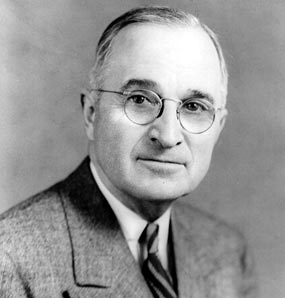
Harry Truman
Henry Morgenthau |
||||||||||
|
How passionate were “mainstream American
Jewish leaders” in their opposition to Peter Bergson? They were passionate all right. “During the
era, Zionist leaders like Rabbi [Stephen] Wise and Nahum Goldmann
told the State Department that Kook/Bergson was as big a threat as Hitler to
the well-being of American Jewry.”[16] Adolf Hitler was carrying out the systematic
extermination of an entire people and culture: the Eastern Jewish ‘Yiddish’
universe, a world full of complex humor, advanced political and religious
ideas, rich literature, and lots of kind-hearted, peaceful people. Example:
Peter Bergson’s brother, from a family of Lithuanian Jews, would not cry
revenge after surviving an entirely unprovoked racist attack; instead he
would become a doctor, saving lives explicitly in order to thank God for his
narrow escape.[17] The Eastern
Jews were not an abstraction. They were individuals, who laughed and joked
around and got drunk and danced, who thought, invented, and wrote, who kissed
their children or parents goodnight, who wondered whether their loves would
be returned, who got together once a week to celebrate, and pray, and who
said ‘Peace’ to each other every time they greeted or parted company. This people was taken away from us. It was a part of us --
a good part -- and it was destroyed, which is why we call it a ‘crime
against humanity,’ because it was a sin against us. And
the man committing the crime that cannot really be named, gouging out this
piece of us forever -- that man was Adolf Hitler. But the mainstream Jewish
leaders Rabbi Stephen Wise and Nahum Goldmann told
the US State Department that Peter Bergson, who wanted to save as many of these
people as he could, was like Adolf Hitler. It is unclear from this alone
whether they spoke out of insanity or hypocrisy, but it certainly establishes
that Stephen Wise and Nahum Goldmann felt a
white-hot hatred for Peter Bergson. Enlightenment begins with the honest absorption of
this simple fact. More enlightenment comes from extending the insight
to see if it is consistent with other things that happen also to be true. For
example, we may consider that Bergson was the political leader of the Irgun, a Jewish underground army in British Mandate
‘Palestine.’ The ideology of the Irgun was that all
Jews were equal, and that the Irgun should
represent and defend them all. “The Irgunists felt that they were saving the Jewish family,
and it did not matter at that point in history if an uncle was never going to
milk a cow on the kibbutz, or that he was lazy or drank too much. He had
every right to get out of the cauldron of Europe and to be brought to
Palestine. They could not tell him that ‘your credentials aren’t good enough
to be a New Jew; go back to Poland.’ Yet that was the openly stated position
of many mainstream Zionists -- even after the war had begun...”[18] There had been pogroms (i.e. unprovoked, anti-Jewish
racist attacks, involving pillage and murder) everywhere in Eastern Europe,
and the annihilation of the Jewish people was being promised by Adolf Hitler
in his speeches if war broke out, and then it did begin when the war broke
out. So the Irgun believed that you could not pick
and choose: every Jew had a right to live in safety. This was the ideology
of the Irgun, of which Peter Bergson was the
political leader. By contrast, “Reform Rabbi
Stephen Wise, the undisputed leader of organized American Jewry, called
[Vladimir Zeev] Jabotinsky
a ‘traitor’ for preaching evacuation of over a million eastern
Jews. ...Furthermore, Wise claimed, the Jabotinsky
movement was guilty of bringing unselected, ‘unsuitable’ Jews to Palestine.
As the United Palestine Appeal’s director Henry Montor
[an ally of Wise] wrote, ‘No responsible person has ever said that Palestine
could hold all the millions of Jews who need shelter.’ Montor
condemned those who ignored the ‘need’ for selecting Jews ‘worthy’ of
settling in Palestine: ‘I think it is fair to point out that many who have
been brought into Palestine by the Revisionists [sic] have been prostitutes
and criminals.”[19] Lots of consistency here. First, Stephen Wise, who felt a white-hot hatred for
Bergson, also hated Jabotinsky, and Jabotinsky, it turns out, had the same ideology as
Bergson’s Irgun: he considered that all Jews were
equal, and therefore all deserved to live in safety. Since Wise and Co.
slandered supposedly low-quality Jews unworthy of a state as “prostitutes and
criminals,” we have an irony, because Wise and Co. were the ones accusing Jabotinsky’s Revisionists, who believed that all Jews
were equal, of supposedly being ‘fascists’ -- kind of like how Wise and Co.
compared Peter Bergson to Adolf Hitler. “Labor Zionist
activist Marie Syrkin denounced Revisionism as
comparable to 'German or Italian fascism,' and Stephen Wise's son James,
editor of the monthly journal Opinion, criticized what he considered
the 'fascist tendencies' of the Revisionist movement. ...Stephen Wise
denounced [Revisionism as]...'Fascism in Yiddish or Hebrew.' [Yet] Jabotinsky in fact denounced totalitarianism and
championed liberal democracy...”[19a] Also not coincidentally, Jabotinsky’s
Revisionist Party was loosely allied with the Irgun,
and Bergson and Jabotinsky had a very good
relationship. Neither is it coincidence that Peter Bergson, on his
mother’s side, was a prince of the relatively small Lubavitch
movement, which interestingly is a form of Orthodox Judaism that nevertheless
has always advocated the national union of all Jews (reform, atheist,
whatever), without distinction or prejudice.[20] These days, one can more easily find Jewish patriots in
the Lubavitch movement than elsewhere. Finally, it is not coincidence that the opponents of
Peter Bergson’s Irgun, in British Mandate
‘Palestine’ as in the US, were the mainstream Jewish leaders; the Irgun was relatively small. This does not exhaust the consistencies, for it
turns out that Rabbi Stephen Wise opposed saving Jewish lives in many
different contexts, despite the fact that he was, among Jewish leaders, the
first to have confirmation, in 1942, that the European Jews would be
exterminated.[24a] For example, before the situation became hopeless,
when British prime minister Neville Chamberlain suggested that Jewish
refugees from Hitler go to the former German colony of Tanganyika, this was
Stephen Wise's absurd reply: “I would rather have my fellow Jews die in
Germany than live in lands which bear the imprint of yesterday’s occupation
by Germany.”[21] I can hardly
imagine anything more absurd: Wise expressed his supposed opposition to Nazi
Germany by proudly offering the German Jews up for Hitler to slaughter!
Needless to say, he was not thereby offering himself. Louis Rapoport quotes the above statement by Wise, and on the
same page writes, “it is inconceivable and clearly slanderous to say that
American Jewish leaders were opposed to saving European Jews.” But I doubt
that Rapoport would be ruling out this
interpretation if it had been a gentile thus replying to Chamberlain, which
underscores the sheer extremity of Wise’s position, however interpreted. In the summer of 1939, as immigration opportunities
everywhere were being denied to the desperate Jews of Europe on the eve of
war, the S.S. Saint Louis, a Hamburg-American Line ship, sailed for
American shores full of Jewish passengers who had, with great difficulty,
legally obtained visas for the United States. This ship was turned away by
the US authorities, partly thanks to Stephen Wise. “A few
American journalists and clergymen called it one of the most shameful episodes
in the history of the so-called ‘haven for the oppressed,’ the United States.
...It appears in retrospect that the St. Louis was a test case for the
Nazis. It confirmed their theory that the democracies were unconcerned about
the fate of the Jews, and it therefore advanced the prospects for a ‘Final
Solution’ to the ‘Jewish problem.’ The American Joint Distribution
Committee...did finally succeed in finding refuge in various European
countries for the passengers of that ship, but most of them would eventually
perish in Hitler’s death camps. Organized
American Jews, led by Rabbi Wise, had not only let down the St. Louis
passengers, but they also failed to press for passage of the Wagner bill,
which had called for the admission of 20,000 ‘German’ refugee children. The
term ‘German’ was used instead of ‘Jewish’ in the draft of the bill because
of the prevailing aversion to bringing Jews to America, led, among others, by
the anti-Semitic ‘tobacco senator’ Robert Reynolds of North Carolina. ...The
cautious attitude of American Jewish leaders guaranteed that the bill would
be defeated when it came before Congress that fateful May.”[22] After the war broke out, Peter Bergson’s Irgun demonstrated that they could save lives but the
mainstream Jewish leaders were more interested in opposing them. “...an Irgun ship guided by Jabotinsky’s
son, Eri, brought over 2000 refugees down the
Danube route to Palestine, underscoring the fact that even with war raging,
it was still possible to get Jews out, even from territories under Nazi
control… Since the day after the war broke out six months earlier, the Irgun had sent fourteen barely seaworthy ships out of
Europe; but the mainstream Zionist movement continued to attack their
efforts.”[23] There seems to have been nothing Stephen Wise would
shrink from when it came to attacking Peter Bergson. He was, for example,
friends with Edgar Hoover, and starting in April 25, 1941, he began asking
for interviews with FBI agents. Rapoport asks, “Did
Stephen Wise provide the FBI with information on Peter Bergson?” We
cannot know, because to this day the information on this remains classified,
but this is not a wild hypothesis, given that a) Wise was telling the State
Department that Bergson was like Hitler, b) he was opposing Bergson in every
way, and c) he considered Bergson a threat to his political position, which
depended on his relationship with people such as Hoover and Roosevelt (see
below). What we do know is that the FBI was not acting speedily enough to
please Wise, because he complained about it.[24] It is true that, in public, Stephen Wise denounced
Hitler's genocide, but so did Roosevelt, and talk is cheap. So the question
is: Why so much opposition to Peter Bergson, who after
all meant to save Jewish lives? |
Nahum Goldmann
Adolf Hitler
Vladimir Zeev “For Hillel Kook and his friends... |
||||||||||
|
Why did the “mainstream American
Jewish leaders” oppose themselves to Peter Bergson and to other rescue
efforts on behalf of the European Jews? Louis Rapoport says that,
in the United States, “The Jewish leaders feared that they would be suspected
of ‘double loyalty’” if they defended the Jews.[24b] Double loyalty? Madness. The Jewish people was being exterminated; compassion by Jewish
leaders towards Hitler's Jewish victims cannot be construed as ‘double
loyalty.’ The refusal of these leaders to act, and their sabotage of those
who did defend the European Jews, was disloyalty to the Jewish
people, and loyalty to the antisemites.
Indeed, on the same page Rapoport says:
Moral cowardice. Even if these Jewish leaders were
right that they would have been accused of ‘double loyalty’ for defending
their European brethren, the right thing to do was still to fight to save
Hitler's victims with all their energies. This is morally obvious. But in any case Peter Bergson was demonstrating that,
even at face value, Wise's supposed argument for abandoning the European Jews
was an utter fallacy. For that very minute, after witnessing an assertive
defense of the European Jews by a Jewish leader in the United States, a great
many ordinary US citizens were finding their consciences stirred, and they
developed an ardent desire to join the fight: as we saw above, 500,000 US
citizens, mostly non-Jews, joined Bergson's pressure movement and forced the
US government to take action, however belatedly and reluctantly. And US
citizens would again demonstrate their basic goodness in 1948 when 250,000 of
them marched in New York in passionate defense of the Jews (see above). A
third demonstration was given during the Civil Rights movement. This should
not be surprising; quite unlike the US ruling elite, ordinary working- and
middle-class Americans tend to have, comparatively speaking, a very good
ideology -- they are some of the best people in the world. It does not appear, at any rate, that Stephen Wise
and Co. were considering the views of ordinary US
citizens at all. Louis Rapoport explains: “. . .the established Jewish organizations were fossilized and
often led by self-righteous, unenlightened men concerned mainly with the
prestige of office.”[25] In other words, Wise and other mainstream Jewish
leaders were worried that they had something to lose if they rocked
the boat. Wise’s position of power and influence in the Jewish community
depended on keeping the antisemitic gentiles who
ran the United States happy. Louis Rapoport gives a
picture of Wise as totally subservient to Roosevelt, who treated Wise with
contempt: “President
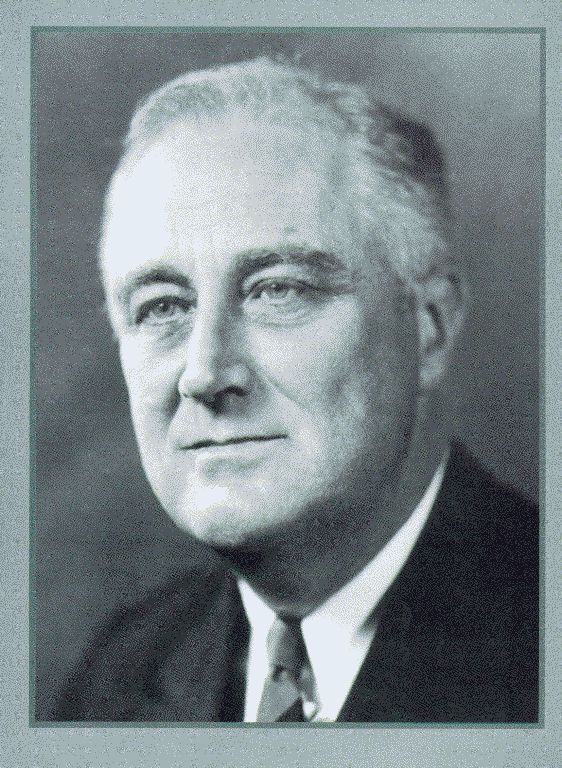
Franklin Delano Roosevelt, whom Wise called ‘Boss’ or ‘Chief,’ regarded the
rabbi as pompous and a pest, and once wrote to him, ‘...you care more for
personal publicity than for good government.’ FDR delighted in teasing ‘Stevey,’ who acted like an awed courtier whenever he
visited the White House. But the results of this absurd relationship would
help compound the tragedy of the Jews of Europe. Even his admirers concede
that Wise’s loyalty to Roosevelt ‘blinded his judgment,’ and his reliance on
FDR would have ‘terrible results.’”[26] Naturally it would have terrible results, because
the immigration policy of the US, with Roosevelt’s personal and explicit
authority, was designed not merely to deny entry to desperate Jews, but to
make sure they ended up trapped in Europe, where Hitler would find
them.[27] Loyalty to Roosevelt meant loyalty to this. Though loyalty to Roosevelt and other antisemites running the US government was enough to
produce opposition to Peter Bergson in the mainstream Jewish leaders, they
had other reasons too. “[Nahum] Goldmann [Stephen Wise’s Richelieu, according to Rapoport], a sworn enemy of Jabotinsky
and the nationalistic Jewish movement, wanted total control of world Jewry
concentrated in his hands, and said so unabashedly. The World Jewish
Congress, which he had set up with Wise, was ‘the single address’
in his mind.”[28] The Revisionist/Irgun
attempts to rescue Jews would naturally raise the prestige of the
Revisionist/Irgun movement in the Diaspora, and would
populate the future state of Israel with Jews who had a reason to thank the
Revisionist/Irgun movement, which would undermine
the political position of mainstream Zionists such as Rabbi Stephen Wise and
Nahum Goldmann. Louis Rapoport
makes explicit reference to this issue as well: “For years,
Rabbi Wise was engaged in a bitter struggle for power with the more activist
Zionists led by Rabbi Abba Hillel Silver and Emanuel Neumann, whose militancy
would be constantly spurred by the growing appeal of the Bergson group.”[29] One clear expression of how Stephen Wise cared only
about his own power is as follows: “In the United
States, Rabbi Stephen Wise issued a statement to the press in November 1939,
condemning ‘the activities of independent organizations seeking to duplicate
or parallel the work of the Jewish Agency.’ Wise ignored the fact that at
that time the Jewish Agency’s own activities were extremely limited.”[30] War had already broken out (Hitler invaded Poland on
1 September 1939), and some people not under Stephen Wise’s authority were
trying desperately to save as many Jewish lives as they could. Wise really
didn’t like that. The extent to which he didn’t may be measured by the
colossal absurdity of his statement: if the Jewish Agency had been busy
saving Jewish lives, how could it be a bad thing to duplicate its activities?
This would have meant more Jewish lives saved! And yet, the Jewish Agency
(represented for several years in New York by Wise’s ally and Bergson’s enemy
Nahum Goldmann) was mostly not saving Jewish lives.
Obviously, what really mattered to Stephen Wise was making sure that no
Jewish political activity took place except under the aegis of his own
organizations, the better to concentrate his power. The reason he called
those groups that were saving Jewish lives “independent organizations”
is that they were independent of his authority. I have focused on Stephen Wise because he was so important,
but the problem was a general one: most Jews in positions of power in the US
allied with the antisemites, not with the Jews, and
even Jews in power who did act for rescue did so belatedly and timidly. For
example, Secretary of the Treasury Henry Morgenthau, who was instrumental in
the creation of the War Refugee Board that saved some 200,000 Jewish lives,
nevertheless cannot be called an enthusiastic Jewish patriot. "...it is
noteworthy that even Morgenthau, although aware for much of the previous year
of State Department obstructionism and although obviously concerned for the
fate of Europe's Jews, hesitated to confront the president. He acted only
after months of urging by key figures on his staff (Josiah DuBois, Randolph Paul, John Pehle,
Ansel Luxford) and by
Oscar Cox of the Lend-Lease Administration, all of them non-Jews, and only
after being presented by his staff with their 'Report to the Secretary on the
Acquiescence of This Government in the Murder of the Jews.'"[30a] And yet Morgenthau was a vast improvement over most
other Jews in positions of power in the United States. "Samuel Rosenman, special counsel to the president and an advisor
on Jewish matters, worked consistently against the president's taking steps
that would have abetted rescue. When the Bergson group organized a delegation
of Orthodox rabbis to visit Washington and lobby Congress and the
administration for intervention, Rosenman tried to
block the visit and then encouraged Roosevelt in his decision not to meet
with the rabbis. When the WRB [the War Refugee Board, which Bergson's
pressure group finally forced the Roosevelt administration to create] pressed
the White House for a more explicit statement threatening war-crimes
prosecutions against those involved in the slaughter of the Jews, Rosenman worked to quash the effort and subsequently to
water down the statement, placing less emphasis on crimes against the Jews.
(The statement he diluted had been approved by three Cabinet departments and
had even gained State Department support). Rosenman
also fought Morgenthau on the creation of the WRB."[30b] The situation in Congress was not better: "Of Jews
in Congress at the time, [historian] David Wyman writes, 'Only Emmanuel Celler persistently urged government rescue actions...
Sol Bloom [as Wyman documents] sided with the State Department throughout.'
Bloom was chairman of the House Foreign Affairs Committee and in a
particularly good position to exert some pressure to promote rescue. But he
appears to have been most concerned with overcoming whatever prejudice there
might be toward him as a Jew, especially in the State Department, by
demonstrating his capacity to rise above 'particularlist'
issues like the fate of European Jewry."[30c] These Jewish leaders were careful not to upset the antisemites who had allowed them to rise to positions of power, and moreover they “feared that the Bergson group’s growing popularity might usurp their own positions of prominence in the Jewish community.”[31]
It is important to state without mincing any words
what these mainstream American Jewish leaders achieved while nursing their
own egos and advancing their criminally narrow personal political interests: they
gave Adolf Hitler courage. As James Carroll says, “As late as
1938, in a furious public rebuttal by Hitler to the world leaders who had
denounced the Kristallnacht pogroms, his decidedly unfinal solution to the Jewish problem was still ‘Jews
out!,’ not ‘Jews dead!’ His proposal, at that point,
was...the expulsion of all Jews from the lands controlled by the Reich. Jews
were offered immediate exit visas -- but exit to where? The same world
leaders, notably Neville Chamberlain and Franklin D. Roosevelt, who had
denounced the anti-Jewish violence of the Nazis declined to receive Jews as
refugees... Crucial to [the Final Solution] building to a point of no return
was Hitler’s discovery (late) of the political indifference of the
democracies to the fate of the Jews...”[32] Of course, most members of the ruling elites in the US
and Britain were not really indifferent -- they were antisemitic.
Still, Jews would have been received in these countries if there had been
internal pressure to rescue the Jewish people, precisely because they were
democracies, however imperfect (Peter Bergson’s objective would be,
precisely, to generate such internal pressure). But the turning away of the St.
Louis, which returned to Europe in June 1939, only two months before
Adolf Hitler invaded Poland, demonstrated that even Jews with legally obtained
visas would not be received in the US. This ‘victory’ of Rabbi Stephen Wise
over his Jewish opponents “confirmed [the Nazis in] their theory that the
democracies were unconcerned about the fate of the Jews, and it therefore
advanced the prospects for a ‘Final Solution’ to the ‘Jewish problem.’” A rocket scientist is not required to conclude this:
You do not gain compassion from a racist murderer if you don’t defend
yourself, and moreover encourage bystanders not to defend you. What you
achieve with this is that you encourage the racist murderer. |
Compassion •
Franklin Delano “FDR delighted in teasing ‘Stevey,’ who acted like an awed courtier whenever he
visited the White House.
Rabbi Abba Hillel Silver |
||||||||||
|
How similar to “mainstream American
Jewish leaders” were mainstream Jewish leaders elsewhere? I am sorry to report that there are plenty of
examples of mainstream Jewish leaders elsewhere behaving much in the same way
that mainstream American Jewish leaders did. I will focus on the case of the
Jewish leadership in Britain for the following reasons: 1) like the
US, Britain never became Nazi-occupied; 2) like the
US, Britain was a democracy; 3) although
the British leadership, like the American leadership, was mostly antisemitic, and though the British Foreign Office, like
the US State Department, did its very best to sabotage the rescue of Jews, a
clear opportunity to save thousands of Jewish lives was sabotaged by the
mainstream Jewish leaders in London; and 5) this has now been well documented. Above James Carroll says that, before the Nazis
settled on the Final Solution, “Jews were offered immediate exit visas -- but
exit to where?” Recently, historian Frank Shapiro has produced
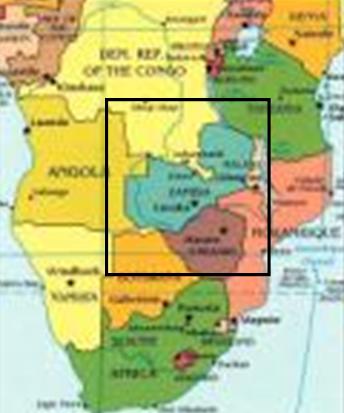
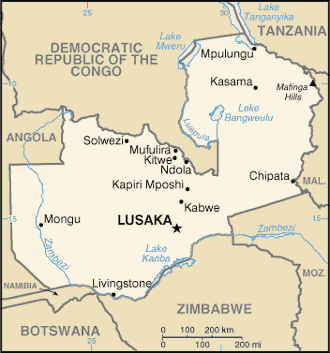
ground-breaking research that has answered this question: Northern Rhodesia
(modern Zambia, with its capital in Lusaka). The refutation of the common
belief that ‘there was no place to go’ has come late because the relevant
documents in Britain were kept classified for more than fifty years. He writes: “Throughout
the world a politically brutal and inhumane picture had emerged: The free
western countries were swiftly closing their gates to any form of mass Jewish
immigration... Palestine, which was the natural and legitimate solution -- as
defined under international law in the terms of the mandate granted to
Britain by the League of Nations -- was now put strictly out of bounds. When
war broke out in September 1939, it was too late to seek a negotiated
solution for these millions of people. By then the Jews were well and truly
locked within the graveyard of Europe. Their fate had been sealed.” But there was a place Jews could go to: “The mosaic of
evidence confirms that vast numbers of Jewish refugees could have been saved and
allowed to settle in Northern Rhodesia.”[33] The main players pushing to make possible a
large-scale settlement plan for Jewish refugees in Northern Rhodesia, a
protectorate of the British Crown, were 1) Reverend Cohen of the Bulawayo
Hebrew Congregation in Southern Rhodesia, 2) J.E. (Chirupula)
Stephenson, a gentile and prominent British colonist in Rhodesia, whom
Shapiro considers a saint, and who with remarkable energy did absolutely
everything in his power to save Jewish lives, and 3) the Colonial Secretary
Malcolm McDonald, who -- apparently in an effort to distract from the fact
that he wasn't letting any Jewish refugees enter British Mandate 'Palestine'
-- was ready to act on the Northern Rhodesian scheme even if it meant
upsetting both the Governor of Rhodesia (a subordinate of McDonald’s) and a
faction of British colonists in Rhodesia who were antisemites.
(As it turns out, however, most of the prominent Northern Rhodesian colonists
who initially opposed mass Jewish immigration ended up in support when the
situation of the European Jews became desperate.[34])
There were ups and downs, plans were proposed,
revised, then aborted, then new plans proposed, and so forth. However, as the
situation in Europe became ever more desperate, a plan for mass settlement of
Jewish refugees in Northern Rhodesia was eventually very seriously
contemplated thanks mainly to Cohen, Stephenson, and McDonald, and then it
was approved. This would have allowed perhaps as many as 3000 Jews to
take refuge in Northern Rhodesia, which was much less than what was obviously
possible, and consequently much less than what Reverend Cohen and ‘Chirupula’ Stephenson had been passionately advocating,
but still better than what was being offered anywhere else. But the mainstream Jewish leadership in Britain
discouraged Malcolm McDonald, and kept the Northern Rhodesia option secret
from the desperate European Jews. Frank Shapiro explains who was in charge: “Until the
1930s, the lay leadership of Britain’s Jewish community remained the
prerogative of an exclusive cadre of personalities of well established, anglicized [Jewish] families, such as Anthony de
Rothschild, Neville Laski, Sir Robert Waley Cohen,
Sir Osmond D’Avigdor-Goldsmid, Lord Bearsted, Sir Herbert Samuel, and Simon Marks, who
provided traditional, paternalistic-style guidance. . . .[After
offering to defray all costs of asylum seekers, freeing the British
government of all responsibility,] control over the category of refugees
admitted became the responsibility of the voluntary organizations which
became centralized in the Emigration (Planning) Committee of the Council of
German Jewry, whose chairman was Anthony de Rothschild and Professor Bentwich its director. This committee was to be the
primary organization dealing with Jewish refugee settlement in Britain’s
overseas colonies [because they were not being admitted into Britain!].”[35] On June 10, 1939, a Mission headed by Sir James Dunnett and appointed to study the feasibility of a mass
settlement scheme for Jewish refugees in Northern Rhodesia completed its
inquiries. The Mission concluded with the most ambitious official
recommendation, which was quite modest compared to what was in fact possible,
but at any rate much better than nothing: 440 families (Eastern European
Jewish families were large, so these might have been as many as 3000 people). “It would have
been expected that with the publication of the Mission’s findings favoring
the settlement of some four hundred refugee families, Rothschild’s Emigration
(Planning) Committee would have immediately struck while the iron was hot and
malleable, and transported the agreed-upon quota into Northern Rhodesia as
fast as possible. Unfortunately, this was not to be. The idea of the report’s
findings bothered Anthony de Rothschild, who expressed the wish to keep the
findings under wraps for the time being.”[36] For the time being. This was June
1939, and the invasion of Poland, which began the World War and sealed
the fate of Europe’s Jews when Hitler overran the continent, was only two and
a half months away. Colonial Secretary Malcolm McDonald was prepared to
order the Governor of Northern Rhodesia, his subordinate, to accept the
refugees, overriding any local opposition. In a statement prepared for
McDonald’s confrontation with Sir John Maybin, the
Governor, and quoted by Shapiro, the London bureaucrats expressed that: “HMG [Her
Majesty’s Government] would in all probability find themselves compelled to
overrule the views of the Governor and of his Legislative Council, assuming
that those views continued to be unfavorable to large-scale settlement.”[37] But the body supposedly created to save Jewish
lives, and presided by the mainstream Jewish leader Anthony de Rothschild,
would not give its endorsement. “However,
the Emigration (Planning) Committee jettisoned the Mission’s plan and had no
intention of implementing it. In their discussion on the Mission’s
findings, rather than working out a concrete settlement plan, the members of
Rothschild’s committee deliberated how to hide the positive intentions; how
to keep the report hushed up, and what the likely reactions would be to any
publication.”[38] [emphasis
original] And they worried they might be attacked for this,
which reveals consciousness of guilt: “One of the leading
Emigration (Planning) Committee members, Lord Hailey, . . .was
particularly worried about how to deal with the potential accusations against
the Emigration (Planning) Committee if they did not publish the report.”[39] The method of procrastination became the assertion
that other schemes (schemes that, needless to say, came to nothing)
should be considered first. Naturally, this gave Malcolm McDonald’s Colonial
Office the cover it needed to do nothing, and so “. . .the Colonial
Office went along with Rothschild’s Committee’s rejection and took the view
now taken by the Committee, namely that all considerations of the Mission’s
Report were to be shelved until information regarding British Guiana was
forthcoming.”[40] Your capacity for shock has not yet been exhausted.
Faced with the disaster of the hushing of the Mission’s Report, “At the end of
July 1939, ‘Chirupula’ Stephenson wrote directly to
Rothschild offering a business deal regarding his own [Rhodesian] farm as a
means to rehabilitate the refugees. Wishing to retire, he offered the
Emigration (Planning) Committee his farm for sale, whereby he would become
Life Director in an ensuing established limited company. According to
Stephenson, the farm comprising some 12,500 acres could support 1,250 men and
women growing crops for export. His message was passed on to the Emigration
(Planning) Committee and almost three weeks passed before Stephenson received
an answer: ‘the Committee decided that for the time being no measures will be
taken in regard to refugee settlement in Northern Rhodesia.’” For the time being. The invasion of Poland
would happen in another week. Perhaps the most amazing thing about this story lies
in a point that Frank Shapiro goes out of his way to document and impress
upon the reader: although there was a lot of official back and forth about
the mass settlement scheme, while this was going on, not one Jew
who tried to enter Northern Rhodesia, with or without a visa, was denied
entry. Every Jew who found out about this made it in. But the Emigration
(Planning) Committee, which body knew this perfectly well, did not publicize
this fact either. The documents relevant to this case remained
classified for more than fifty years: more evidence of consciousness of
guilt.
Is the current Jewish leadership different? The next
piece in this series will document that it is not. But casting here just a
brief glance into the future, notice one deadly connection between the past
and the present. As we've seen above, “the Emigration (Planning) Committee,”
which body prevented at least 3000 Jewish lives from finding save haven in
Northern Rhodesia, “[was] headed by such eminent personalities as...Lord
[Herbert] Samuel...” This Herbert Samuel had been the High Commissioner for
Palestine, and he presided over the elevation of Hajj Amin al Husseini as
Mufti of Jerusalem, after Hajj Amin demonstrated that he could
organize anti-Jewish terrorist riots in British Mandate 'Palestine'! Hajj Amin al
Husseini went on to organize bigger anti-Jewish terrorist riots with the
budget and authority that Herbert Samuel gave him,
and when the World War exploded he became one of the main leaders of Adolf
Hitler's Final Solution in Europe. Later, he also mentored Yasser Arafat, and
grandfathered Fatah, Arafat's organization.[41] This would be
the same Yasser Arafat and the same Fatah that current mainstream Jewish
leaders have labored energetically to empower inside the Jewish state. |
Modern Zambia
• Not
one •
Herbert Samuel |
||||||||||
|
The next piece in
this series is:
|
Notify me of new HIR pieces!
|
||||||||||
|
________________________________________________________ Footnotes and Further Reading [1] This quote
is reported, I should note, by an admirer of Stephen Wise. It will be found
here: Urofsky,
M. I. 1982. A voice that spoke for justice: The life and times of Stephen
S. Wise. Albany: State University of New York Press. (p.304) [1a] Levin, K. 2005. The Oslo syndrome: Delusions of a
people under siege. Hanover, NH: Smith and Kraus. (p.119) [1b] Rapoport, Louis. 1999. Shake heaven and earth: Peter Bergson
and the struggle to rescue the Jews of Europe, Gefen,
Jerusalem and New York. (p.221) [1c] The Oslo syndrome (p.119) [2] “Can Israel
survive if it does not defend itself?: The Jewish people must come to grips
with their radical opposition to self-defense”; Historical and Investigative
Research; 13 Sep 2005; by Francisco Gil-White [3] Rapoport, Louis. 1999. Shake heaven and earth: Peter Bergson
and the struggle to rescue the Jews of Europe, Gefen,
Jerusalem and New York. (p.vii) [3a] Levin, K. 2005. The Oslo syndrome: Delusions of a
people under siege. Hanover, NH: Smith and Kraus. (pp.118-119) [4] LIQUIDATION
DAY SET FOR FRANCE'S JEWS; Whole Problem Is to Be Put Into German Hands by
Feb. 15, Relief Groups Hear SEVERAL METHODS USED Internment and Deportation
Are Employed, as Is Assignment to Dangerous Work; By DANIEL T. BRIGHAM; By
Telephone to THE NEW YORK TIMES.. New York Times (1857-Current file). New
York, N.Y.: Jan 27, 1943. p. 10 (1 page) [5] Total Nazi
Executions Are Put at 3,400,000; Poland, With 2,500,000 Victims, Tops List;
New York Times (1857-Current file). New York, N.Y.: Feb 28, 1943. p. 12 (1
page) [6] No US visas
for European Jews trying to escape the Nazi slaughter; From “Is the US an Ally
of Israel?: A Chronological Look at the Evidence”;
Historical and Investigative Research; by Francisco Gil-White. The allies refused to sabotage the Final Solution by
military means; From “Is the US an Ally of Israel?:
A Chronological Look at the Evidence”; Historical and Investigative Research;
by Francisco Gil-White. [7] “The Day the
Rabbis Marched”; David S. Wyman Institute for Holocaust Studies; October 06,
2005; by Rafael Medoff. (Dr. Medoff is director of The David S. Wyman Institute for
Holocaust Studies.) [7a] I have
examined this pathology of reasoning in the following piece:
[7b] Levin, K. 2005. The Oslo syndrome: Delusions of a
people under siege. Hanover, NH: Smith and Kraus. (p.137) [8] In the 1930s,
the US Establishment helped sponsor the rise of the German Nazi movement;
From “Is the US an Ally of Israel?: A Chronological
Look at the Evidence”; Historical and Investigative Research; by Francisco
Gil-White. [9] No US visas
for European Jews trying to escape the Nazi slaughter; From “Is the US an
Ally of Israel?: A Chronological Look at the
Evidence”; Historical and Investigative Research; by Francisco Gil-White. The allies refused to sabotage the Final Solution by
military means; From “Is the US an Ally of Israel?:
A Chronological Look at the Evidence”; Historical and Investigative Research;
by Francisco Gil-White. [10] The
following three pieces contain discussion, making reference to the relevant
documentation, of how US Intelligence absorbed and sponsored Nazi war
criminals after 1945:
The following piece documents the power that US
Intelligence was given in 1947 to corrupt the press and the entire political
process, making US citizens essentially powerless to control their own
government:
[11] “The British
Record on Partition”; Reprinted from The Nation, May 8, 1948; Comments by
Jared Israel, Emperor's Clothes. [12] In 1947-48,
forced by external circumstances, the US government gave lukewarm support to
the creation of the State of Israel. But then it reversed itself and
implemented anti-Israel policies; From “Is the US an Ally of Israel?: A Chronological Look at the Evidence”; Historical and
Investigative Research; by Francisco Gil-White. [13] To read an
analysis of all this, consult:
To see a photo of the demonstration, in the original
NYT article that reported on it, visit:
NOTE: The NYT headline diminishes the size of the crowd
to 100,000, but the body of the article reports that the NYC police estimated
the crowd at around 250,000. [14] Friedman,
Saul S., 1937- Shake Heaven and Earth: Peter Bergson and the Struggle to
Rescue the Jews of Europe, and: America Views the Holocaust,
1933-1945: A Brief Documentary History (review); American Jewish History -
Volume 88, Number 1, March 2000, pp. 141-145 [14a] HOLOCAUST: THE AMERICAN JEWISH CONSPIRACY OF SILENCE:
The Rise and Fall of the American Jewish Commission on the Holocaust; The
Forgotten Heritage: The Struggle of the Irgun's
Delegation to the United States (1939-1945) Against the Silence of America
(The Story of the Bergson-Hecht Group); The Jewish Post of New York; May/June
1996; by GAD NAHSHON. [14b] Levin, K. 2005. The Oslo syndrome: Delusions of a
people under siege. Hanover, NH: Smith and Kraus. (p.137) [15] Rapoport, Louis. 1999. Shake heaven and earth: Peter Bergson
and the struggle to rescue the Jews of Europe, Gefen,
Jerusalem and New York. (p.viii) [15a] The allies refused to sabotage the Final Solution [16] Rapoport,
Louis. 1999. Shake heaven and earth: Peter Bergson and the struggle to
rescue the Jews of Europe, Gefen, Jerusalem and
New York. (p.xi) [17] “Two of
Hillel’s [Bergson’s] brother’s were injured in
different pogroms [anti-Jewish racist attacks]. In the worst pogrom, when
Rabbi Dov Kook and his sons, Rafael and Herzl, were
out of town, Girgoriev’s men invaded and ransacked
the Kook’s home. Rebecca fled with her youngest, four-year-old Hillel [who
would later be Peter Bergson]…, and her four girls; Batya,
Sonia, Tzila, and Nehama.
Fifteen-year-old Nahum, who stayed behind, was shot in the chest, the bullets
penetrating his lungs. The pogromchiks left him for
dead. Rebecca and her children hid in the cellar in the courtyard, where
other Jewish mothers were sheltering their children, trembling in fear.
Hillel’s mother warned her little boy not to cry out, or she would have to
clasp her hand over his mouth, as another young mother was doing to her
child. They stayed in the cellar for hours. When they emerged, the found
Nahum at death’s door and the streets of the town literally flowing with
blood. The experience was indelibly branded into Hillel Kook’s soul: His
earliest memories were of Jews being shot, or cut down with swords or axes.
Nahum was brought by cart to the hospital, where the doctors said there was
no hope for him. But somehow, he survived. In offering thanks to God for what
was considered a miraculous recovery, he took a vow to become a doctor. This
was pleasing to Rebecca, who wanted two of her sons to become rabbis, and the
other two to become physicians.” SOURCE: Rapoport, Louis. 1999. Shake heaven and earth: Peter
Bergson and the struggle to rescue the Jews of Europe, Gefen, Jerusalem and New York. (p.15). [18] Shake
Heaven and Earth (p.32) [19] Shake
Heaven and Earth (p.32) [19a] Wyman,
D. S., and R. Medoff. 2002. A race against
death: Peter Bergson, America, and the Holocaust. New York: The New
Press. (p.19) [20] Shake
Heaven and Earth (p.14) [21] Urofsky, M. I. 1982. A voice that spoke for justice: The life and times
of Stephen S. Wise. Albany: State University of New York Press. (p.304) [22] Shake
Heaven and Earth (pp.33-34) [23] Shake
Heaven and Earth (p.39) [24] Shake
Heaven and Earth (p.62) [24a] On August
28, 1942, Rabbi Stephen Wise received an alarming cable from London. It read
in part: "IN FUHRER'S HEADQUARTERS PLAN DISCUSSED AND UNDER
CONSIDERATION THAT ALL JEWS IN COUNTRIES OCCUPIED OR CONTROLLED [BY]
GERMANY...SHOULD AFTER DEPORTATION AND CONCENTRATION IN EAST AT ONE BLOW BE
EXTERMINATED." The message had originally been sent by Gerhart Riegner, the World
Jewish Congress representative in Switzerland. It came to Wise because, as a
leading figure in more than a dozen Jewish organizations, he was probably the
most influential and well-respected American Jew of his generation.
[24b] Rapoport, Louis. 1999. Shake heaven and earth: Peter Bergson
and the struggle to rescue the Jews of Europe, Gefen,
Jerusalem and New York. (p.34) [25] Shake
Heaven and Earth (p.41) [26] Shake
Heaven and Earth (p.61) [27] No US visas for
European Jews trying to escape the Nazi slaughter; From “Is the US an Ally of
Israel?: A Chronological Look at the Evidence”;
Historical and Investigative Research; by Francisco Gil-White. [28] Shake
Heaven and Earth (p.62) [29] Shake
Heaven and Earth (p.44) [30] Shake
Heaven and Earth (p.39) [30a] Levin, K. 2005. The Oslo syndrome: Delusions of a
people under siege. Hanover, NH: Smith and Kraus. (p.138) [30b] The Oslo syndrome (p.138) [30c] The Oslo syndrome (pp.138-139) [31] “The Day the
Rabbis Marched”; David S. Wyman Institute for Holocaust Studies; October 06,
2005; by Rafael Medoff. (Dr. Medoff is director of The David S. Wyman Institute for
Holocaust Studies.) [32] Carroll, J. 2001. Constantine's
Sword: The Church and the Jews. Boston: Houghton Mifflin. (p.522) [33] Shapiro,
Frank. 2002. Haven in Africa, Jerusalem and New York, Gefen (p.1-3) [34] Haven in
Africa (pp.90-91) [34a] BRITISH MANDATE; MCDONALD WHITE PAPER | [35] Haven in Africa (pp.33-34) [36] Haven in
Africa (p.111) [37] Haven in
Africa (p.117) [38] Haven in
Africa (p.117) [39] Haven in
Africa (p.117) [40] Haven in
Africa (p.119) [41] You will find the most complete documentation on this
here:
Some of this material was originally published here:
|
|
||||||||||





Reform Rabbi
Stephen Samuel Wise
Reform Rabbi Steven Samuel Wise